Showing posts with label African-American. Show all posts

5.16.2008

Community History at the AAMLO

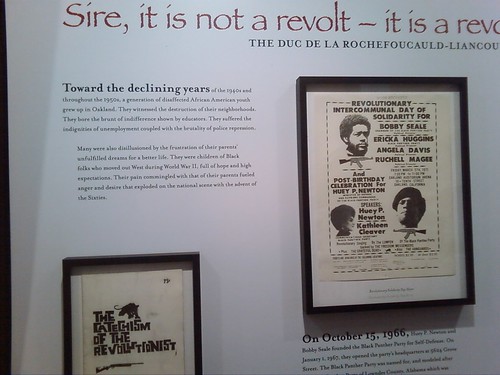
Recommended: The African American Museum and Library is hosting a lovely exhibit right now called The African American Community in Oakland. Photographs, ephemera, and video presentations of oral histories give a well-rounded picture of the history of Oakland's black neighborhoods and communities.

Multimedia message

4.19.2008

The 1858 Black Exodus

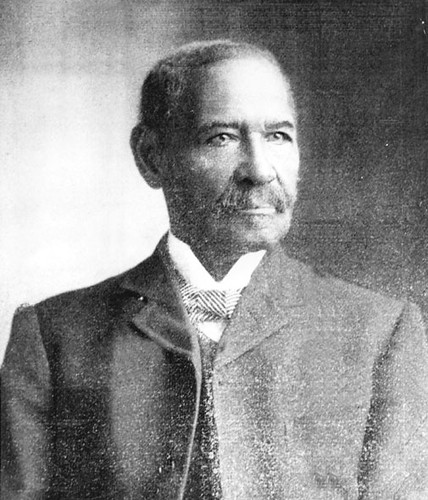
Mifflin.jpg
Mifflin Wistar Gibbs: founded the first black newspaper in California, joined hundreds of his peers in leaving San Francisco to find his fortune in Canada, became the first black man to join the Victoria city council and eventually returned to the US where he served as the first elected African American municipal judge in the country.


This week, San Franciscans will observe the 150th anniversary of an exodus of hundreds of free black Californians to Canada in order to escape an increasingly racist state government and fugitive slave laws that endangered their lives and to join a more welcoming community in Victoria, British Columbia. A list of commemorative events is available here. Learn more about African American civil rights struggles during the gold rush era at sfmuseum.org.

4.01.2008

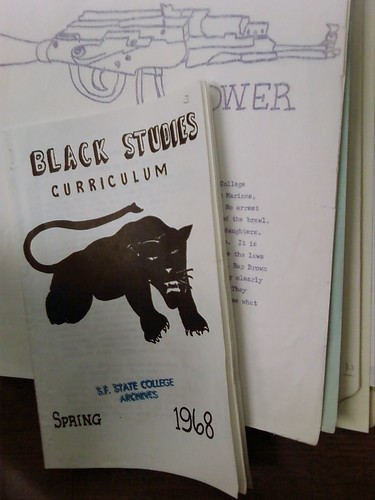
San Francisco State on Strike

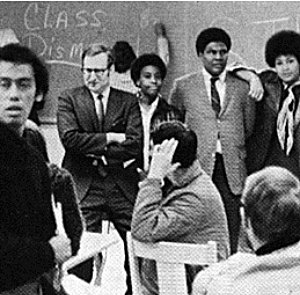
Class dismissed.jpg


San Francisco State lacks ivy and graying brick and doddering old Englishmen riding their bicycles to class or whatever it is that makes for a prestigious university. It is a working-class college by design and students are as likely to show up on the streetcar as they are to live on campus, just like in the 1960s. Its public school nature might explain why the student activism that was almost ubiquitous on campuses in the mid-1960s looked different at State than it did at schools filled with the children of the ruling class. Maybe the Sixties activism at State had a more lasting impact too. While college students around the country helped stop the Vietnam war, the current mire in Iraq leaves that victory a little hollow. But the demonstrations at State led to the formation of the country's first ethnic studies department – an institution that quickly spread to campuses around the country and is still a major feature of universities around the world. The classic Sixties student concerns were at State too. Anti-war students held marches and sit-ins at State. But anti-war protests were only a part of the picture.

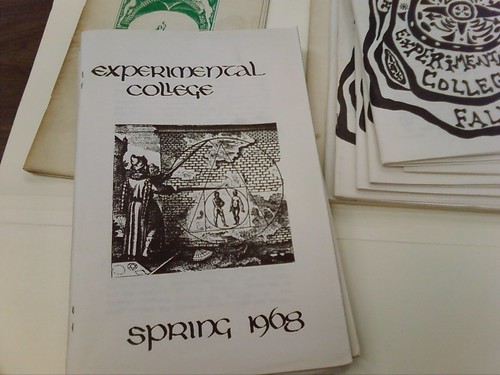
State had innovated the general education requirement that students at most colleges now expect (or dread), but by 1965, State students were criticizing these general classes as irrelevant. They founded their own Experimental College – student-run seminars on topics like social change, avant-garde art and personal growth. After Steven Gaskin's Monday night class on mysticism, spirituality and etcetera outgrew its home at the Experimental College he brought his dozens of followers in a caravan of school buses to Tennessee where they founded the archetypical counterculture commune - The Farm. The trippy Experimental College people opened up thinking about what a college could be. They made student directed education a reality, which probably influenced the focus of the third and most lasting thread in State's student movement.

Multimedia message


That third thread was the increasing militancy among black, Latino, Asian-American, and indigenous student activists. Radical students of color, many who were involved in off-campus movement work, wanted curriculum that mattered to them. They wanted the college to offer something beyond the white, Western histories, art, music, and perspectives that dominated academics at the time. They wanted teachers who came from their own communities and meaningful access to education for the people of color who were not getting admission to the school in the first place. Students of color wanted a say in the programs that impacted them, and as such, a formerly white-run community tutoring program where mostly white State students worked with mostly black children in the Fillmore was one of the first campus organizations to have a total personnel and color changeover. Black tutors rejected the apparent paternalism of the liberal white tutors and stepped in to teach black kids themselves. On campus, students and progressive instructors pushed for Black Studies classes and got them, but only with part-time professors. Student leaders pushed for a recognized Black Studies department with full time black professors. They argued for broader admissions policies to allow poor black and brown kids access to the school.

Multimedia message


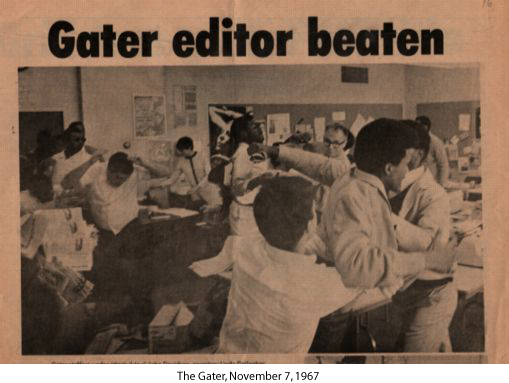
Mainstream white students started getting nervous. The campus newspaper, The Gater, printed a notice from their white editor stating that he had written to the Carnegie Corporation asking them to reverse their plans to fund off campus State programs including programs of the Black Student Union. This was 1967. Non-violent civil rights groups seemed irrelevant to a lot of young, black activists in San Francisco who were more likely to find inspiration from Malcolm X than Martin Luther King. The larger protest movement was taking on a militant flavor too. In this context, a few irate black students responded to the Gator editorial by beating the editor in question.

gater editor.jpg
From the SF State Library Strike Collection


The students involved in the beating were suspended, supporters demonstrated in their defense, campus organizing grew. Part of what made the SF State struggle special was that students resisted a dichotomous view of race as simply black and white. Filipino and Chicano students were as influential as Black students in forming the radical agendas of the moment. PACE, San Francisco State's Pilipino American student group may have been the first radical Filipino American organization in the country. PACE, the Latin American Students Organization, El Renacimiento, a Mexican American student organization and other ethnic-based student groups united under the banner of the Third World Liberation Front. Radical white students supported Third World students with their own demonstrations opposing the war and supporting the call for racial fairness and Ethnic Studies programming. By 1968 students around the country (and in Mexico, Germany, France, Japan, and elsewhere) were seizing university buildings in protest or for their own purposes. In March of 1968 the Third World Liberation Front took over the YMCA office at State.

The administration cracked down. Not just on students but also on their progressive teachers. Professor and activist Juan Martinez had been hired by the history department and also to direct a new program aimed at bringing more "minority" students to the campus. When in the spring of 1968 he helped bring several hundred Mexican and Pilipino American students to demand applications from the Dean of Admissions, he was told that he would not be re-hired in the fall. George Murray, a minister of education with the Black Panther Party, was hired to teach general ed English classes, but when he told an audience at Fresno State that, "we are slaves and the only way to become free is to kill all the slave masters", he was suspended. George Murray's suspension triggered a breaking point for student activists, and in November of 1968 students walked out of classes. Led by Black and Third World students and supported by the radical and mostly white Students for a Democratic Society, they created two lists of their strike terms (one from the Black Student Union and one from the Third World Liberation Front) that included the demand to re-hire George Murray, automatic admission for all Third World Students who applied to the school, and a creation of permanent Black Studies and Ethnic Studies departments with paid, full-time staff.

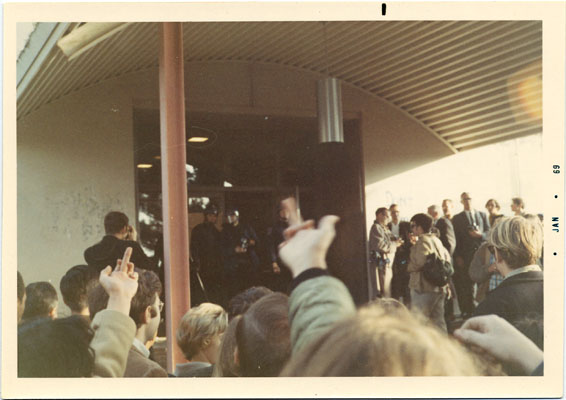
Fuck off.jpg
From the San Francisco History Center


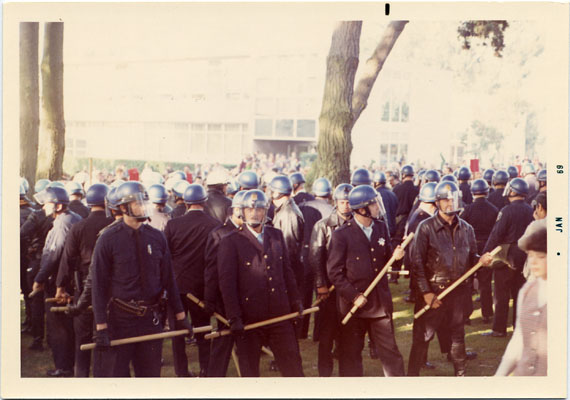
The administration panicked. The police were called in, in large numbers and clad in riot helmets. A series of college presidents resigned before S. I. Hayakawa, the Canadian-born Japanese-American professor was promoted to the position. (Hayakawa initially made a name for himself in Semantics and he wrote an important book which he hoped would serve as a critique of fascist propaganda. Apparently critiquing fascism lost its appeal – after State he served as a Republican in the US Senate and in the early '80s he founded US English, an English-only advocacy organization. I should also mention that for most of his career he was known for wearing a jaunty Tam-o-Shanter.)

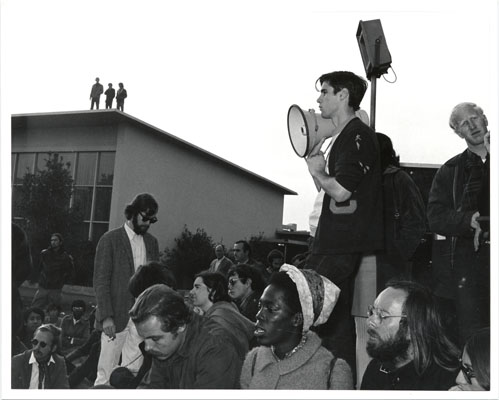
speaker.jpg
From the San Francisco History Center


Hayakawa's first official act as president was shutting down the campus. If students insisted on walking out of class, then school would be closed to avoid the massive demonstrations. When school officially re-opened in early December (with sparse student attendance), Hayakawa confronted demonstrators who were broadcasting pro-strike messages from a soundtruck on the corner of 19th and Holloway. As the argument escalated the college president climbed on top of the protestors' truck to rip the wires out of its speakers. In return, someone pulled his tam off his head. In the hubbub Hayakawa apparently yelled ''You're fired!'' at author and State professor Kay Boyle, and she apparently replied by calling him 'Hayakawa Eichmann". The strike went on.

SFSTATE Riot cops.jpg
From the San Francisco History Center


By early January of 1969, Hayakawa had banned all gatherings on the central campus and limited access for non-students. Picketers were required to remain on the perimeters of the property. But at this point the situation was uncontainable. The SF State local of the California Teachers Federation joined the strike demanding educational reform, removal of police from the campus, agreement to student demands, and a collective bargaining contract. When the San Francisco Superior Court ordered the teachers back to work the next day they refused.

Strike related protests happened frequently and on and off campus. Sympathetic City College of San Francisco students marched to State to express their solidarity. State students and supporters marched to City Hall. Across the bridge students at Oakland City College (now called Merritt) protested in support of the struggle. In January of 1969 Third World students at U.C. Berkeley started their own, related strike for Black and Ethnic Studies departments. Movements for Black and Ethnic Studies were growing at campuses in New York, New Jersey, Washington, Wisconsin, North Carolina, all over.

The strike went on. Lines of police occupied the campus all day like a military force. One freshman was injured when his homemade bomb blew up in his hands. Professional negotiators were called in. San Francisco's Mayor Alioto appointed a citizens committee to negotiate the strike. And finally in March, the Third World Liberation Front, the Black Students Union, and university administrators (not including Hayakawa) signed a compromise agreement: An ethnic studies department was established. The university pledged to admit hundreds of new black and third world students. In short, we won. We won at State and like dominos, universities around the country dropped their resistance to Ethnic Studies programs, hired more teachers of color, admitted more black and third world students. Community control seems a pretty abstract idea now, but classes and teachers that reflect our real experiences and lives are the lasting gift that San Francisco State strikers left us when they took control of their own education and their own institution. So thank you.


For more on the San Francisco State Strike:

PACE has a little youtube video about their history:


And here's a short documentary on the strike from SGTV:


State has a great archive of the strike. Some of it is online here. Check out their list of books on the strike too.

For a little first person story related to the strike check out Its About Time, a Black Panther Party commemorative website for an account of the related San Francisco Community College strike. Don’t miss the PDFed news articles from the time, linked at the bottom of the article.

Shaping San Francisco has another account, and another.

Finally, if you can stomach some annoying Marxist voiceover for the sake of some fantastic footage, California Newsreel's San Francisco State: On Strike is worth a watch. It includes some pretty ugly police brutality that I hadn't thought to anticipate when I watched it with my five year old.

2.23.2008

Books for Kids

I try not to be too heavy-handed about politics with my kids but I do hope they will get some basics about how we are where we are. Here are two "messagy" books I've been reading to them lately:


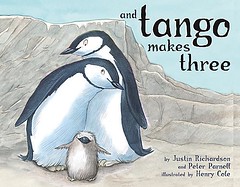
Tango Makes Three.jpg

And Tango Makes Three by Justin Richardson and Peter Parnell and illustrated by Henry Cole is the sweetest little bit of gay propaganda you could possibly read to your children. It's the true story of two male penguins in the Central Park Zoo who entwined necks, vocalized together, had sex with each other (OK, that part's not in the kids book), and were finally given the opportunity to raise an adopted penguin chick. You have to be a truly homophobic grinch to remain untouched by what sweet dads the gay penguin pair made. And the story is not too preachy feeling - what kid doesn't want to hear about penguins?


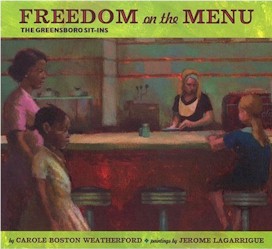
 Freedom on the Menu.jpg

Freedom on the Menu by Carole Weatherford and illustrated by Jerome Lagarrigue tells the story of the 1960 Greensboro lunch counter sit-ins that led to the desegregation of Woolworths' and other restaurants throughout the South. I love how Freedom on the Menu emphasizes community action instead of just one or two key leaders. And even though it deals with the painful topic of segregation, it feels optimistic and hopeful about the power of collective action. The lunch counter sit-ins were started and led by college students and the book is told from a child's eye view which makes it easier for a five year old to connect with.

Bring on your suggestions for kids' books about activism and history folks!

10.26.2007

Sister Comrade

You don't want to miss this one: Sister Comrade, a celebration of the lives of poet activists Audre Lorde and Pat Parker:

Sister Comrade Flyer

10.07.2007

Wattstax

Have you seen Wattstax? Maybe because it was released a year before I was born, I never saw it until just this second. I thought I would watch it while I worked on the homework for my web design class, but this is shredding me - I cannot take my eyes off the screen! Not only is it an amazing concert movie, not only is it an awesome document of a particular historical moment, but the seventies outfits are blowing me away!

If you have a pulse, you must watch this film. Here's the preview (you can ignore the dumb voiceover, but don't miss Oaklander Ted "Isaac, Your Bartender" Lange!):

9.10.2007

Rosie the Riveter Memorial Park

Rosie Memorial 2


I told the kids I was taking them to the Rosie the Riveter Park, which they seemed very excited about it despite the fact they've never heard of Rosie the Riveter. The concept of Rosie the Riveter is confusing because the idea that there was a time when women weren't allowed to work the same jobs as men is foreign to them. I mean, their parents are lesbians – in their world, women do everything including fixing cars, washing dishes, and rolling children up in their blankets like human burritos; why shouldn't women rivet? And what the hell is a rivet anyway? On the way to the park I gave them my now classic lecture (most recently used when discussing Martin Luther King Jr.) about how Sometimes People Have Ideas That Aren't True, and It's Important to Tell Those People That ANYONE Can Be a Riveter (or that anyone should be able to ride in the front of the bus, depending on which lecture I'm giving). (I restrained myself from giving a lecture on war profiteering, which might have been more appropriate for this memorial – more on that in a minute.)

Rosie Memorial 5


I hadn't been to Richmond in a while, and when I got off the freeway, I was completely confused by the impenetrable wall of condos. This isn't the Richmond I'm familiar with, and if it is part of Richmond now, what is the city doing with all the new property taxes? Please, someone with some real Richmond knowledge fill me in. In any case, I got lost in condo land and finally ended up at an upscale mini-mart where I asked the proprietor for directions to Rosie the Riveter Park. He looked over his glasses at me and chuckled (I'm not exaggerating - he really chuckled!), "Your expectations are too high," and directed me back to a patch of grass next to a parking lot I'd just passed.

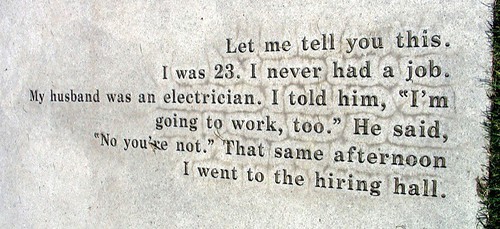
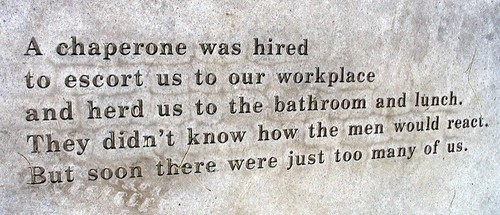
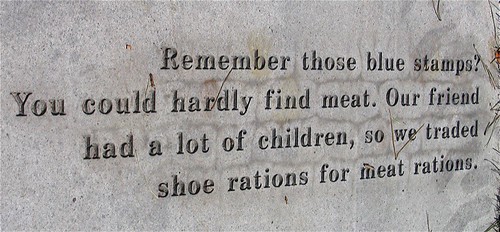
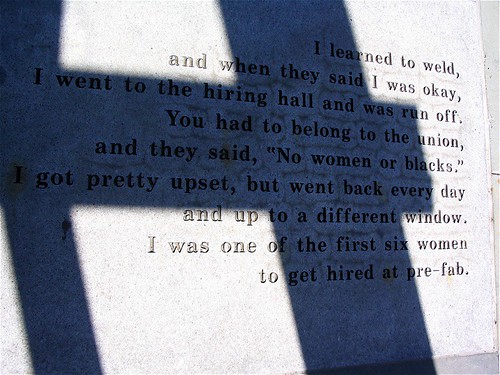
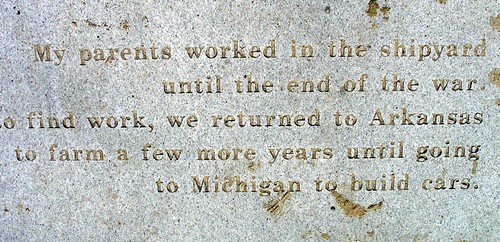
The kids and I got out at the Rosie Memorial, a little exhibit about women homefront workers that was commissioned by the City of Richmond, and designed by artist Susan Schwartzenberg (Susan, why don't you have a website?) and landscape architect Cheryl Barton. Given, I'm a nerd, but I really liked it. The memorial runs the length of a Liberty Ship, and as you walk along the path spanning the ships distance, you can read a mini labor history of WWII, with a focus on people of color and women. Also interspersed are quotes from women shipyard workers, and these, along with photos posted at the site, are the most affecting part of the exhibit.

Rosie Memorial 4


The memorial is planted on the former site of Kaiser Shipyard number 2, where steel magnate Henry J. Kaiser employed many thousands of workers to build ships for WWII.

Richmond's history is inseparably linked with Kaiser's factories and with the war. Richmond became a largely African-American city (36% of the population according to the latest census) as a result of migration related to the war industries. And the poverty that many Richmond residents confront now is directly linked with the city's failure to create adequate housing and infrastructure for its many new residents during the war, and the sudden disappearance of jobs that occurred when the war was over.

Rosie Memorial 6


In 1940, Richmond had a small town feeling and a population of around 23,000. By 1950, the population was more than 99,000. Workers came in carloads and trainloads, brought by the more than 170 recruiters that Kaiser employed around the state and around the country to power the shipbuilding empire that he had centered in Richmond. So desperate was Kaiser for workers that at one point, LA recruiters instituted a "work for drunks" program where judges issued suspended sentences to 'vagrants' in exchange for an agreement to come work in the Richmond yards. That program didn't last long, but even for the average newly arrived worker, (if you can say that there was an 'average' since folks came from all over the state, from all regions of the country, and represented dozens of ethnic groups) the attrition rate was high. Once workers arrived they found limited housing, working conditions that were both stressful and tedious, and the loneliness of leaving home. The many new African-American workers transplanted from the South found themselves subject to the same Jim Crow racist hiring and housing practices they were familiar with from back home. War industry work crews were racially segregated, Black workers were rarely promoted to supervisory positions, and Black workers were refused membership in the major unions and instead relegated to auxiliary 'negro' unions where members were expected to pay dues but received little or no protection. (White women faced job discrimination as well, receiving significantly lower pay for jobs that white male workers got more for). While many protested these conditions, for example, in the Sausalito shipyards nearly all the Black employees walked out in protest of racist conditions in 1943, government agencies, white labor leaders, and industrialist business-owners were less than sympathetic. Outside of the factory, public housing built during the war was segregated in Richmond, as it was in Oakland and elsewhere in the Bay Area. (According to The Second Gold Rush, details on that book below, Berkeley community leader Byron Rumford started a petition drive protesting public housing segregation which finally lead to federally mandated integration of Berkeley/Albany public housing in 1946.) Basic workplace rights and decent housing were a struggle for Richmond's many new Black residents. For their part, newly arrived white Southern workers tended to complain about 'having to' work side-by-side with African-Americans.

Rosie Memorial 3


Who was Henry J. Kaiser? He was your basic guy-out-to-make-a-buck, all-American, success story. He got his big start running a road-paving business, and ended his life turning Honolulu into the tourist sink that it is today. He was successful to say the least – his company, along with another Bay Area local, Bechtel and four other companies managed the construction of the Hoover Dam. During the war, Kaiser employees in Richmond (and his three other factories along the West Coast) were building a whole war ship in about a month (the record was set when workers constructed an entire ship in just over four days). His name also lives on in the Kaiser Permanente HMO, which was created because Kaiser needed to provide some basic health services to his thousands of employees, and who can afford that kind of expense (while maintaining a millionaire lifestyle)?

When the war ended, Kaiser moved on to new projects. He even (briefly) got into the auto industry. For the thousands of factory workers who had moved to the Bay Area, many full of patriotism and hope for the future, life wasn't quite as easy as Kaiser's. The jobs disappeared almost immediately. Soldiers came home and were given priority for the few jobs that remained. Women and men of color found themselves fired or demoted to make way for white men who were prioritized by employers. Today Richmond is still full of art, culture, and hard work, but undeniably, Richmond has been scarred by the poverty that is a legacy of the war industry here. The Rosie Memorial is just a little thing, but I loved getting to learn more about why things happened the way they did here. I was glad to come. I confess that the kids liked the nearby boats a lot more than that exhibit, but what can they do, they're a captive audience.

Rosie Memorial 1


This entry barely scratches the surface of what can be said about the long-term impact of WWII industry on race, gender, and economics here. If you want to learn more, there are a bunch of other sources I'd recommend:

Marilynn S. Johnson's The Second Gold Rush provided a bunch of references for this post. It's factually dense but it maintains a readable narrative. I don't think you have to be as obsessive as I am to enjoy it, which is unusual for this kind of regional history book.

Fight or Be Slaves also has tons of information about this period.

Robert Self discusses issues related to changing racial dynamics in the East Bay after WWII in American Babylon. Unfortunately, I got about 50 pages into this book last summer, and then accidentally left it at Feather River Family Camp, so I can't tell you for sure if it's worth reading, but my friend Jess was just saying good things about it, so on his recommendation, I'll say, go for it.

I thought this Bay Crossings article had some interesting history about water travel related to Richmond.

Finally, I was inspired to check out the Rosie park after reading a nice article about it in the San Francisco Bayview. The article originally appeared on Black Commentator, but I'm including the Bayview link because of some additional notes at the end of their version.

Hey, if you want to learn more, Here's a whole pile of relevant sources.

I'll send you out with this video by historian Betty Soskin on African-Americans in the Richmond war industries. You can read some details about the content of the video here.

7.23.2007

Ericka Huggins

Dana and I went out to Thai food on Grand Avenue the other day, and happened to sit next to one of my heroes. Later I wished I had said something really thoughtful and articulate like, "Excuse me, I apologize for interrupting your meal, but I couldn't let you leave without telling you how grateful I am for the work you've done to support the liberation of African American people, and of all people, and for the many very real sacrifices you've made over these many years. Thank you." Of course, if I had actually talked to her in the moment, whatever I said would have come out making me sound like a gibbering stalker, (I know this to be true because I ran into her once before, and did talk to her like a gibbering stalker), so it's for the best that I contented myself to bask in the glow of her fashionable (although in no way ostentatious) back, which was seated only a foot or two away from me.

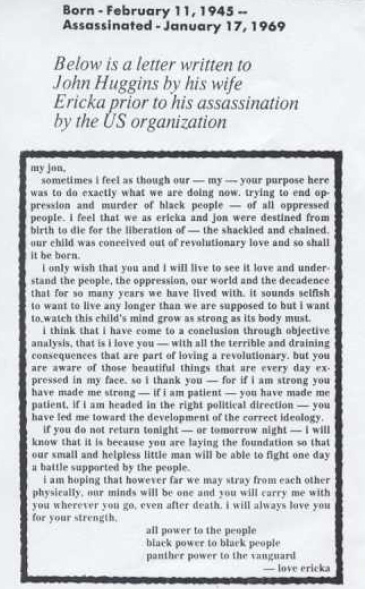
I doubt she's recognized much now, but Ericka Huggins spent a few years being infamous. In 1970, she was a defendant in an internationally notorious and highly politicized murder trial in New Haven, Connecticut. Folks like Dr. Benjamin Spock and writer Jean Genet came to Yale to speak on her behalf. One year before that trial, her husband John Huggins, a leader in the Los Angeles chapter of the Black Panthers, was killed at UCLA by members of a rival activist faction. Throughout the 70s she co-authored a book of poems with Huey Newton, held political offices, and directed a Black Panther school. I wish I knew more about what she's doing now – meditation, spirituality and education seem to be among her current interests, and she does some speaking about her time in the Black Panthers, but it's hard to find out much about her because, although one site says that she's writing a memoir, she clearly isn't out to promote herself, which is a consistent theme for her, actually.

Ericka grew up in Washington, D.C. She was politicized early on, attending the March on Washington when she was 15. The late 60s, the moment when Ericka was coming of age, was a point of increasing militancy among activists in general, and Black activists in particular. (SNCC for example, a major organization in the Civil Rights Movement, officially changed its strategy from specifically nonviolent, to including a broader range of tactics when Stokely Carmichael took over the organization in 1966.) Like thousands of young people around her, Ericka probably felt shocked and horrified by the poverty and violence that Black people and poor people were experiencing around her. Race riots were a regular feature of the late 60s, and were invariably inspired by, and then followed by, harsh police violence. The Vietnam War, and protests against it, escalated around her. Internationally, militancy seemed to be on the increase, with revolutionary movements gaining prominence in Palestine, Northern Ireland, and even next door in Quebec. In this context, in 1968, Ericka joined the Black Panthers. She met John ("Jon" in Ericka's love letters) at college and they moved together to LA where they got very involved in the growing Panther chapter there. They took and then taught political education classes, organized, fundraised, served in the Party social programs, and I'll assume they studied marksmanship, a requirement for all Party members. John took on a leadership position. Ericka got pregnant.
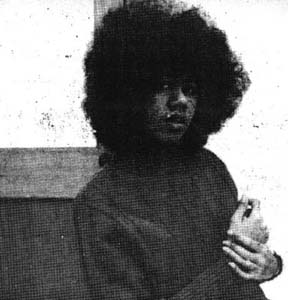


Ericka in the late 60s
With his beard and bellbottoms, John gave off much more of a hippy vibe than his fellow militants, especially Bunchy Carter, a charismatic former gang leader who was a rising star in the Party (and was known for his impeccable style), and who was with John on the day they met with, and then were shot and killed by members of the US organization at UCLA. I won't pretend that the details of this story aren't complicated*, but one thing we do know from 1975 senate hearings on the FBI's counterintelligence program (Cointelpro) is that the FBI actively sought to increase tension between the Panthers and US**, before and after these killings, by sending inflammatory cartoons and letters to both organizations, and by propagating rumors about each organization. I've read that Richard Held, the FBI officer in charge of the L.A. office at that time took credit for the deaths of Huggins and Carter. I can't back that one up with a citation though.

After John's death, Ericka moved with her daughter Mai to Connecticut where John's parents lived. With local activists, she started a Panther chapter in Bridgeport, and then moved it to New Haven. She was 21.

In her memoir, A Taste of Power, Brown remembers Ericka as being checked out and disconnected after John's death. An interview with a Connecticut Panther in another memoir - David Hilliard's This Side of Glory - describes her as "spaced out but genuine". I don't know why she kept sleepwalking through her activist career at that point. Maybe if your partner is killed for the revolution, you feel you must soldier on, to give his memory meaning. Especially because, as she trudged through what must have been a personal nightmare, the bigger community was turning uglier around her too.


John Huggins was killed on January 17th, 1969. That night, the LAPD raided John and Ericka's home and arrested all twelve Panthers inside, including Ericka with their infant daughter. There were no real charges filed against those arrested – the LAPD justified the arrests by saying that they were preempting retaliatory action towards members of US. This kind of police action towards the Panthers was typical. They raided Panther offices across the country frequently, and often repetitively, sometimes looking for specific suspects, sometimes just to destroy their typewriters, or break up their free breakfast program, which the FBI specifically sought to destroy. (Details on that here. Just search for "breakfast".) In April of '69, 21 New York Panthers were arrested and charged with conspiracy. All 21 were eventually found innocent. Also in April, the Des Moines Panther office was leveled by a bomb blast, injuring two Panthers. In response, local police arrested Panthers. In the first two weeks of May that year, the LAPD arrested 42 Black Panthers. Of course, this hostility wasn't one sided. The Panthers were both a service organization and a militant one, and as much as their free clothing, free food, free medical clinics, ambulance service, and free breakfast programs have been underreported, their armed confrontation of police was also quite real. Panthers regularly engaged in shootouts with police, and not all these were initiated by the cops. After all, the Panthers were trying to engage in a revolutionary struggle.

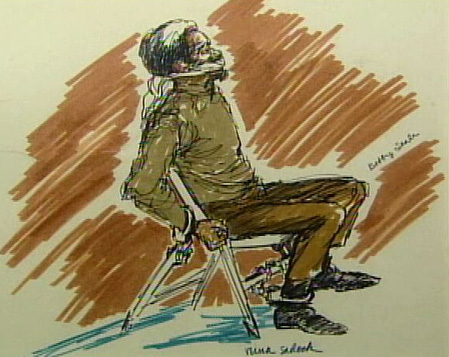
Outside of the Panthers, even mainstream liberals were aware of how harsh the repercussion could be for activists who opposed the status quo. In August of 1968, Chicago Mayor Richard Daley had sent 12,000 police officers and 7,500 National Guard in to disrupt protests at the Democratic Convention. (Bobby Seale, the Panther's co-founder and essentially second-in-command officer, spent several years fighting legal charges from the Convention protests. He'd famously been bound and gagged in the courtroom during his trial.) In December of 1968, more than 450 students at SF State were arrested in connection with a student strike in support of Black Studies program. And only a few months earlier, police had massacred hundreds of student demonstrators in Mexico City. Vietnam raged on. Nixon had just been inaugurated. Someone who was as involved in the Panthers as Ericka was in early 1969 must have been pretty convinced that the revolution was needed, that it was coming, that a new system of socialist governance prioritizing self-determination for Black people and economic fairness for all seemed like a real possibility. And militant struggle probably felt like it was the strategy for bringing that revolution.


seale bound.jpg

Courtroom illustration of Bobby Seale, bound and gagged during the initial Chicago 8 hearings

It feels important to know all this context before you read what happened next. What happened next is that that someone, a Panther, murdered someone else, another Panther, a 19 year old from New York. And that young murder victim, Alex Rackley, was killed after two days of being tortured – having boiling water poured on his body and so forth. And Ericka was in the house where all this happened.

A mentally-unstable out of town Panther named George Sams instigated the kidnapping and torture of Rackley, who he accused of being an undercover agent. Several New Haven Panthers participated in the torture and then in the murder. Sams only did four years in prison for the killing, and rumors persist that he was an agent provocateur himself, although I've never read any evidence for this. He was certainly crazy, and was heavily medicated during his own trial. And it is unarguable that the Panthers were heavily infiltrated. Still, at the point when you are pouring boiling water on someone, or even watching your comrade pour boiling water on someone, you must take some personal responsibility. Going along with what you're told isn't any more justifiable for revolutionaries than it is for Nazis.
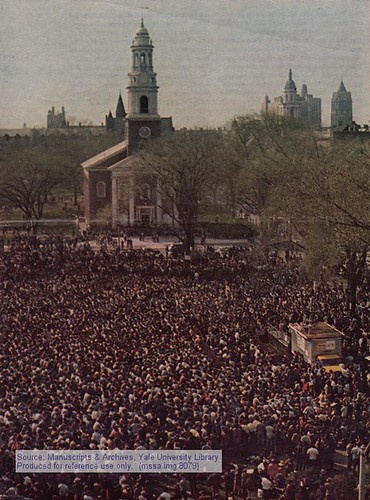


May Day rally at Yale protesting the trial of Ericka Huggins and Bobby Seale
While it's not a justification, I'm sure that Ericka Huggins learned this lesson. After the actual killers were convicted (some confessed, turning state's evidence), she and Bobby Seale were tried for ordering the murders. They spent two years in jail in New Haven during the proceedings, inspiring an international protest movement.*** Yale students staged a months-long strike, starting with a massive May Day rally featuring Abbie Hoffman et al. While she was in prison, Free Jazz pianist Francois Tusques composed a song for her. (You can listen to it on this archived WFMU jazz show. The song starts roughly at minute 1:46 and then restarts at 1:48.)

What shocks me about Ericka Huggins, is that after seeing the absolute ugliest sides of revolutionary movements, she moved to the Bay Area and spent the 1970s working on the Panther newspaper, running for and then serving on the Berkeley Community Development Council (an anti-poverty agency) and on the Alameda County School Board, and eventually running the last surviving segment of the Black Panther Party – their children's school. She was, I guess, one of the last members of the Black Panther Party, since she continued to run the school throughout the 1970s until it finally closed in the early 80s, long after every other Panther institution was gone, and after Huey Newton, the organizations' charismatic but borderline leader had lost all credibility among activists and even most of his friends.

Another thing that strikes me about Ericka Huggins is the way she just doesn't show up in Panther memoirs. Elaine Brown, who named her daughter Ericka dedicates more page space to her than any other Panther alum. As far as I remember, everything Elaine says is positive, and even in her book, there's not much. In other memoirs, Ericka tends to show up for a few pages as a benign force and then disappear, as if she was never there. For someone who was so important in the Party, I can only guess that she found a way to stay out of everyone's way and for the most part, do the work that felt important, instead of engaging in power-plays or battles of ego.


The Oakland Community School - the final Black Panther project.
Sitting next to her at dinner, I confess I had a difficult time paying enough attention to my date. What does someone who spent more than a decade trying to make the impossible work feel when it doesn’t? What does it feel like to be so key in a grassroots, militant, educated, disciplined, activist corps - a group that seemed so close to revolution – and then to lose it? Does she resent the way Panther leaders spiraled out of control? Does she feel defeated by the forces of the state – the FBI, the police, the media – that did, in fact defeat her movement? Does she feel manipulated? Is she angry? Her manner is quiet and poised. She projects a feeling of attentive calm. I hope she thinks back on serving free food to children, on writing and explaining, on teaching and running a school that provided a real alternative for kids who needed it and feels proud.

_________

That's how I ended this article. And I was just looking for a few more photos before posting, when I decided to start googling Ericka's name and the world "meditation" (since I know she's a practitioner) and found her to be associated with that ashram on San Pablo – Syda.

Apparently, the New Yorker did an investigation of Syda a few years ago, and quoted members who reported sexual and financial abuses within the largely secretive organization. Former members complained that they were harrassed if they spoke out. There's a website where ex-members share their (bad) experiences, although for the record, most of the alleged abuses happened quite a while ago, and even the New Yorker article points out that most members have no contact with the people at the top of the organization, and simply go to Syda's various ashrams to meditate, chant, and find spiritual community. At this point, I'm feeling a bit depressed by imagining my hero as a cult member. And I'm sure it's more complicated than that anyway. I guess I shouldn't be surprised that she can stomach a degree of unquestioned hierarchy, since she managed to work under an abusive power fiend like Huey Newton for so long.

I really admire Ericka Huggins. I'm not an investigative reporter, and if I was, why would I want to 'expose' someone who has spent most of her life working for good? So what if she likes charismatic leaders? I want to respect the fact that she has a life. Has some privacy. So good luck to you Ericka. I'm not going to read any more about what you did or what you do. Thank you for your work. Good luck to you in your life.


_______________

*Trying to make out what really happened here is completely impossible. Every Panther has their story, and the stories tend to contradict each other.

**Every December I subject some poor soul to my annual anti-Kwanzaa rant. I know that if the holiday has come to have meaning for people, I should support it, but for me it is uglied by the fact that it was created by Ron Karenga (or, as he named himself, Maulana – a Swahili word for master teacher). Karenga was the head of US at the time of the UCLA shooting. He went on to serve prison time for assaulting and torturing two female members of his organization.

** As usual, Snopes does a nice job of clarifying the line of bullshit that circulated on the net a few years ago suggesting that Hillary Rodham, a Yalie, was Ericka's defender. (As if Hillary would have advocated for militants!


If you're not done already with learning about Ericka:

I mentioned it a bunch of times because A Taste of Power talks more about Ericka than most published material on the Panthers. The author, Elaine Brown, has been accused of including some inaccuracies, or maybe outright lies in this book, but it is as good a history of the Black Panther Party as any, and, coming from a woman's perspective, manages to be honest about some of the disparities that did exist in the organization.

Most of what I know about Ericka's trial comes from the long out-of-print Agony in New Haven, which was certainly descriptive. It seemed to depict the four month long jury selection process in real time, detailing each potential juror, each recess called by the judge, and each outfit chosen by the various lawyers. Well written, but only worth while if you're obsessed. There's a newer book I haven't read yet called Murder in the Model City which probably provides some more context.

I know he's become controversial, even among radicals, but Ward Churchill's Agents of Repression (written with Jim Vander Wall) is still the most readable, detailed, and footnoted book I know about Cointelpro and it's where I first learned anything about the Panthers. I recommend it.

Finally, the very best website for Black Panther information is It's About Time. This site has tons of original source material on the Party: newspaper transcriptions, dozens of photos, regional chapter histories, and updates on issues impacting former Panthers now. Most of the photos in this post came from that site (thank you!) and I haven't even gotten half-way through all there is to read there yet. Check it out.

Note that I've made a couple small factual and editorial corrections and changes since I first wrote this, although the post is pretty much the same as the original.
 
Creative Commons License
Some Rights Reserved.